
How to Create High-Converting UGC Ads
 Bastian W.
UGC ads fail for one simple reason, most brands try to make them look like ads.
What actually converts is the opposite. A good UGC ad feels like a real person noticed a real problem, tried a product, and got a result worth sharing. It looks native to the feed. It moves fast. And it earns attention in the first 2 seconds, before your audience scrolls past.
If you want to learn how to create UGC ads that lower CPA, lift click-through rate, and give your creative team more testing volume, you do not need a bigger production budget. You need a better system. The win is speed, clarity, and repeatability. Once you know the structure, you can ship 10 solid concepts in the time it used to take to produce 1 polished brand video.
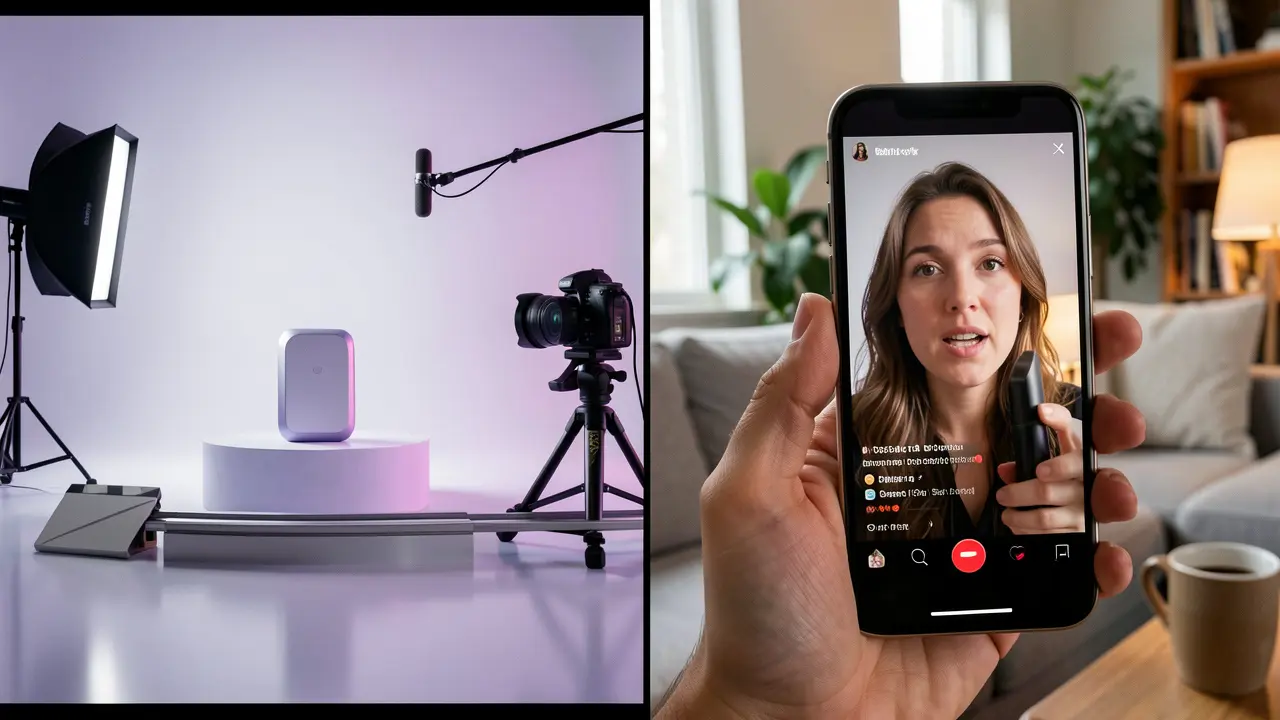
What creating UGC ads really means
User-generated content ads are paid social ads that look and feel like content made by everyday people. Sometimes they are made by real customers. Often they are made by creators who produce customer-style videos for brands. The point is not strict authenticity theater. The point is believability.
That distinction matters. A glossy studio edit can still work for awareness. But UGC performs best when your goal is direct response. You want someone to see themselves in the scenario. You want the message to land quickly. You want the product benefit to feel proven, not proclaimed.
So when people ask how to make UGC ads, they are usually asking a more useful question, how do you create ad creative that feels native, trusted, and conversion-focused without overproducing it? That is the real job.
Why UGC ads outperform polished brand creative
UGC works because it reduces resistance. Viewers are used to filtering out ads the second they detect brand language, perfect lighting, or over-scripted delivery. Native-looking content buys you one more second of attention, sometimes that is all you need.
It also compresses the trust gap. A creator saying, “I tried this because my skin was wrecked after travel,” is stronger than a brand saying, “Our formula supports hydration.” One is a claim. The other is a lived experience. Not always more factual, but usually more watchable.
The other reason is operational. UGC is faster to test. You can vary hooks, angles, creators, openings, and CTAs without reshooting a full campaign. That means more creative throughput, more tests, better odds of finding a winner.
UGC ads are not the same as organic UGC
This is where many teams waste time.
organic UGC is content people post on their own. Paid UGC ads are created with intent. They are scripted, briefed, shot, and edited to hit performance goals. The best ones still feel casual. But under the hood, they are structured.
Think of them as performance assets disguised as personal content. The casual tone is the wrapper. The ad strategy is the engine.
Key aspects of high-performing UGC ads
The fastest way to improve UGC performance is to stop thinking about “making a video” and start thinking about building a response sequence. Every strong ad has the same core job: stop the scroll, frame the problem, present the product, prove the value, and ask for action.
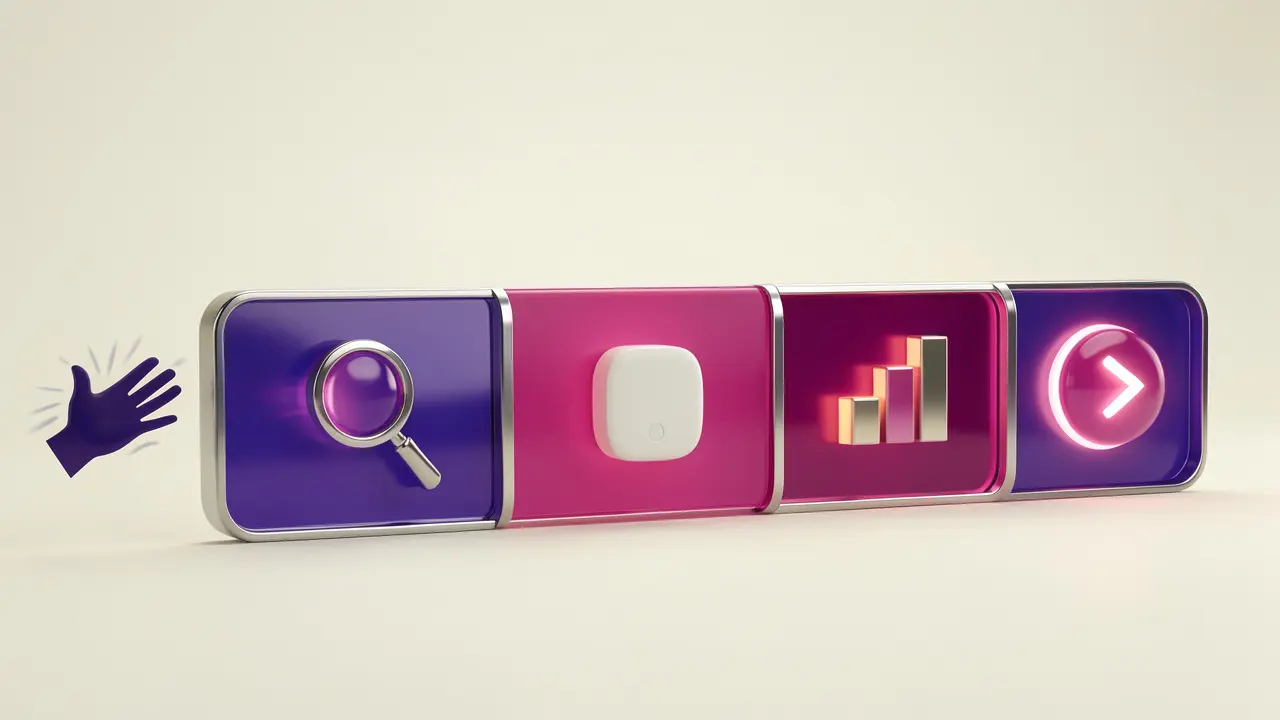
Start with the hook, not the product
The first 1 to 3 seconds decide whether the rest of the ad matters. Your hook should call out a problem, a desire, a surprise, or a pattern interrupt, not generic branding, not a logo animation, not “Hi guys.”
A weak opening says, “I want to tell you about this amazing product.” A strong opening says, “I wasted €80 on products that never fixed this.” The second version creates tension. It makes the viewer ask, “Fixed what?” That curiosity buys watch time.
If your hook is not working, the issue is usually one of three things: it is too vague, it starts too late, or it sounds like an ad. Tighten it until it reads like a sentence someone would actually say to a friend, while still pointing at a clear pain point.
Focus on one angle per ad
Brands often cram six benefits into a 20-second video. That kills clarity.
A UGC ad should usually revolve around one dominant angle. That angle might be saving time, solving a specific problem, reducing cost, improving convenience, or delivering a visible before-and-after result. You can mention supporting details, but the viewer should remember one thing.
If you sell a supplement, one ad can focus on energy in the afternoon. Another can focus on easier morning routines. Another can focus on taste compared with competitors. Different ads. Different angles. Same product.
This matters because creative testing is easier when each ad isolates a variable. If one video wins, you know why. If one video fails, you know what to change.
The creator matters, but the brief matters more
The creator matters, but the brief matters more. A common mistake is hiring a creator with a good look but no performance structure. The result is content that feels nice and says nothing.
What you want is a creator who can deliver lines naturally and follow conversion logic. That means they understand hooks, proof, objections, pacing, and CTA placement. A mid-sized creator with strong direct-response instincts will often outperform a polished influencer who is used to lifestyle content only.
Still, even great creators need a precise brief. Give them the target audience, pain point, angle, mandatory claims, visual moments, CTA, and what to avoid. Keep it tight. Clear briefs create faster output and fewer revisions.
Native visuals beat polished visuals
You do not need bad quality. You need appropriate quality.
Most winning UGC ads are shot vertically in 1080 x 1920, usually at 24fps or 30fps, with natural light, handheld framing, and a lived-in environment like a kitchen, bathroom, desk, or car. The visual language should match the platform. TikTok creative should not feel like a TV spot cropped for mobile.
That does not mean careless execution. Audio still needs to be clean. The face should be well-lit. Product shots should be visible. Captions should be readable. The ad should feel effortless, not sloppy.
Proof is what turns attention into action
A scroll-stopping intro gets you a view. Proof gets you the click.
Proof can be a testimonial, a demo, a before-and-after, a screen recording, a side-by-side comparison, a measurable result, or a reason the viewer believes this product works for someone like them.
If you say, “This made my mornings easier,” that is soft proof. If you say, “I cut my routine from 25 minutes to 8,” that is stronger. If you show the product in use while saying it, stronger again.
Specifics win. Time saved. Steps reduced. Cost compared. Visible improvement. Sensory detail. You are not trying to sound impressive. You are trying to sound credible.
How to get started with UGC ads
The easiest way to create UGC ads is to build a repeatable production loop, not a one-off campaign. A loop is a process that takes an angle from idea to script to creator brief to first edit in days, not weeks.
Begin with customer research, not creative inspiration
Strong UGC starts in your reviews, support tickets, comments, Reddit threads, creator feedback, and post-purchase surveys. That is where your hooks come from. That is where objections live. That is where phrases appear that real buyers actually use.
Look for repeated patterns. What problem were people trying to solve before they bought? What almost stopped them from buying? What result surprised them? What alternative were they using before? Those answers become ad angles.
If five customers say they were skeptical but changed their mind after seeing how simple setup was, that is not just feedback. That is a script. You have an objection and a resolution. That is the raw material of a high-converting UGC ad.
Write ads like spoken language, not copywriting exercises
A lot of UGC scripts fail because they read like website copy pasted into a selfie video.
The best scripts use short, spoken lines. They sound natural out loud. They leave room for personality. They move from pain to product to proof without trying to be clever. If a line feels too polished to be said in a bathroom mirror with a phone in hand, it probably needs work.
Keep the structure simple. Open with the problem. Introduce the product as the fix. Show or describe the experience. Add proof. End with a direct next step. That is enough.
A useful script shape looks like this in practice: the creator names the pain, explains what they tried before, introduces the product, shows what changed, and closes with a reason to act now. You are not writing a film. You are engineering a response.
Use this simple production workflow
To create UGC ads consistently, follow a lightweight system. First, pick one audience and one angle, for example busy parents and time-saving convenience. Then write three hooks for that same concept to test the opening before changing the body. Brief one to three creators on the same message so you get different faces and delivery styles. Edit two to four versions from the same raw footage, changing pacing, captions, proof moments, and CTA placement. Finally, launch and compare performance, watching thumb-stop rate, hold rate, CTR, CVR, and CPA.
This is how performance teams scale, not by betting on one perfect ad, but by producing variation around a clear hypothesis.
Keep scripts short and testable
For most paid social placements, 15 to 30 seconds is the sweet spot. Some offers need less. Some demos need more. But shorter usually forces better discipline.
A 20-second ad has no room for wasted setup. If your point starts at second eight, you started too late. Bring the conflict forward. Show the product earlier. Put proof on screen while the creator talks. Use captions so the message lands even with sound off.
Aim for scripts that can be revised fast. If changing one claim means rewriting the entire video, your scripting is too fragile. Modular creative wins because it lets you test quickly.
Build a creator brief that reduces revisions
A strong brief saves money and days.
Most brands under-brief on the things that matter and over-brief on style preferences. The creator does not need a brand novel. They need performance clarity. Tell them who the ad is for, what pain to lead with, what message must be included, what footage to capture, and what deliverables you need.
A practical brief should cover the audience, the single angle, two to four hook options, clear proof points such as demo or before-and-after, mandatory shots like product close-up and reaction, specs such as 9:16 vertical and clean audio, and one direct CTA. This level of detail improves first-pass quality and gives your editor what they need to cut multiple variants from the same raw footage.
How to create UGC ads that actually convert
Getting started is one thing. Building ads that drive purchases is another. Conversion comes from the combination of message, proof, and edit discipline.
Match the ad to the stage of awareness
A cold audience does not need the same video as a retargeting audience.
If the viewer has never heard of you, lead with the problem and the transformation. Keep claims simple. Explain the product fast. If the viewer already visited your site, you can go harder on objections, comparisons, pricing logic, or testimonials.
Many brands misread results by running the same generic UGC ad across every audience. It is usually not saturation, it is mismatch. The ad is saying the wrong thing to the wrong person at the wrong stage.
Edit for retention, not aesthetics
A pretty edit is not the goal, watch time is the goal.
That means faster cuts, tighter pauses, captions that emphasize meaning, and visual changes every few seconds when needed. It also means removing throat-clearing. If a sentence does not increase clarity, tension, trust, or desire, cut it.
Good editors shape the ad around moments of proof. They know when to zoom into the product, when to hold on the face, and when to show text on screen. They do not just assemble clips, they manage attention.
Layer in objections without slowing the ad down
Every buyer has friction. Your UGC ad should address that friction naturally.
If your product seems expensive, show why it replaces three cheaper alternatives. If setup seems hard, show the full setup in ten seconds. If quality is a concern, zoom into the materials or results. If skepticism is high, reference the creator’s hesitation before they bought.
The trick is speed. Do not stop the ad for a formal FAQ section. Weave objections into the story. “I thought this would be complicated, but it took me less than five minutes,” is far stronger than listing “easy to use” as a feature.
Use CTAs that fit the intent
Your CTA should match both the platform and the level of buyer readiness.
For lower-consideration products, direct CTAs like “shop now” or “grab yours today” can work well. For higher-consideration products, a softer CTA like “see how it works” or “check the details” may convert better because it lowers pressure.
What matters is specificity. “Learn more” is fine if the landing page does heavy lifting. But if your offer is straightforward, be clearer. Ask for the click you want.
Common mistakes that kill UGC performance
Most weak UGC ads do not fail because the format is broken. They fail because the ad ignores how people behave in-feed.
Mistake 1: sounding scripted
If the creator sounds like they are reading ad copy, trust drops fast. UGC should feel guided, not memorized. Leave room for the creator’s phrasing as long as the core message stays intact.
A useful test is simple. Read the script out loud. If it sounds like a landing page headline, rewrite it. Spoken language is shorter, rougher, and more direct.
Mistake 2: hiding the product too long
Some brands spend ten seconds on setup before the product appears. That is too slow for most placements.
Show the product early. Mention it clearly. You can still build curiosity, but do not make viewers work hard to understand what they are looking at. Confusion is not intrigue. It is drop-off.
Mistake 3: saying benefits without showing evidence
“Game-changing.” “Obsessed.” “So good.” These phrases are everywhere because they are easy to say and hard to prove.
Replace vague praise with visible evidence. Show texture. Show steps. Show timing. Show comparison. Show the product solving the thing you claimed it solves. The more concrete the proof, the less persuasion pressure the creator needs to carry.
Mistake 4: testing too little variation
One UGC ad is not a UGC strategy.
Winning creative usually comes from volume with intention. You want multiple hooks, multiple creators, multiple cuts, and multiple angles. Small changes in the first line, the first frame, or the order of proof can shift performance materially.
A simple testing view includes variables such as the hook (pain-led, curiosity-led, callout-led), the creator (different ages, tones, aesthetics), the angle (save time, save money, visible result), the edit style (fast cuts, slower talk-through, heavy captions), and the CTA (shop now, learn more, see results). Testing those variables is how teams find scale, not from one creator or one script, but from a system that keeps generating fresh combinations.
Metrics that tell you if your UGC ads are working
Creative feedback gets subjective fast. Metrics keep you honest.
The first signal is whether the ad earns attention. Look at thumb-stop rate, hold rate, and video watch time. If people are leaving immediately, your hook is weak or the ad looks too promotional too early.
The second signal is whether the message creates intent. Click-through rate tells you if the offer and creative are compelling enough to earn action. If retention is strong but CTR is weak, the ad may be entertaining without being persuasive.
The final signal is business impact. Conversion rate and CPA tell you whether the ad is attracting the right traffic and setting correct expectations. A high CTR with poor conversion can mean the ad overpromised, attracted the wrong audience, or mismatched the landing page.
Track creative at the variant level. Hook A versus Hook B. Creator 1 versus Creator 2. Caption-heavy edit versus cleaner edit. The more precisely you label and compare, the faster you improve.
A practical first batch to produce this week
If you are starting from zero, do not aim for a full creative library on day one. Build a tight first batch.
Create three angles based on real customer pain points. For each angle, write three hooks. Give the same concept to two creators. Then cut two edits from each video. That gives you 18 testable assets from a compact workflow.
That volume is enough to spot patterns. You will learn which hooks get attention, which creators feel believable for your audience, and which proof formats move clicks. From there, double down on what works and cut what does not.
Conclusion
If you want to know how to create UGC ads that perform, the answer is not better lighting or trendier editing, it is better structure. Start with a real customer pain point. Build one clear angle. Write spoken hooks. Show proof fast. Test variations with discipline.
Your next step is simple. Pull 20 customer quotes. Turn the top three recurring problems into ad angles. Script three hooks for each. Brief two creators. Launch the first batch and let the metrics tell you what to make next. That is how you stop guessing and start shipping UGC ads that convert.

Written by
Bastian W.
Use APImage to generate video ads that actually convert.
Launch High-Converting Video Ads
Use APImage to generate video ads that actually convert.
Create a Video Ad
 Bastian W.